About Laugharne
The bigger picture
The context for the plan is shaped by wider social, economic and environmental issues facing rural Carmarthenshire including technology, climate emergency and decarbonisation, the ongoing impacts of COVID-19 and leaving the European Union (Brexit).
The strategic context also includes priorities of Carmarthenshire County Council, the Swansea Bay City Region and the Welsh Government, along with the growing influence of the Well-being of Future Generations (Wales) Act and local Well-being Plans.
A key aim of the Act calls on public bodies to be more agile to ensure they are able to respond to ever-changing economic circumstances and to maximise new opportunities for growth. Sustainable development is applied throughout, as well as new ways of working ensuring that local authorities take account of the long term, prevent problems occurring or getting worse, and adopt an integrated and collaborative people-focused approach.
The context for the plan is shaped by wider social, economic and environmental issues facing rural Carmarthenshire including technology, climate emergency and decarbonisation, the ongoing impacts of COVID-19 and leaving the European Union (Brexit).
The strategic context also includes priorities of Carmarthenshire County Council, the Swansea Bay City Region and the Welsh Government, along with the growing influence of the Well-being of Future Generations (Wales) Act and local Well-being Plans.
A key aim of the Act calls on public bodies to be more agile to ensure they are able to respond to ever-changing economic circumstances and to maximise new opportunities for growth. Sustainable development is applied throughout, as well as new ways of working ensuring that local authorities take account of the long term, prevent problems occurring or getting worse, and adopt an integrated and collaborative people-focused approach.
Laugharne today
Laugharne is a small town with a large reputation because of its castle and historical architecture, the international profile associated with poet Dylan Thomas and picturesque coastline and attractive foreshore.
The township historically grew around the area of the original harbour and River Coran and is densely developed. Apart from small infill developments, most of the towns recent growth, including the primary school and housing, has taken place on the higher ground above the town (Gosport Street) and in the outlying countryside. The town has become a popular place to live and for second/holiday homes.
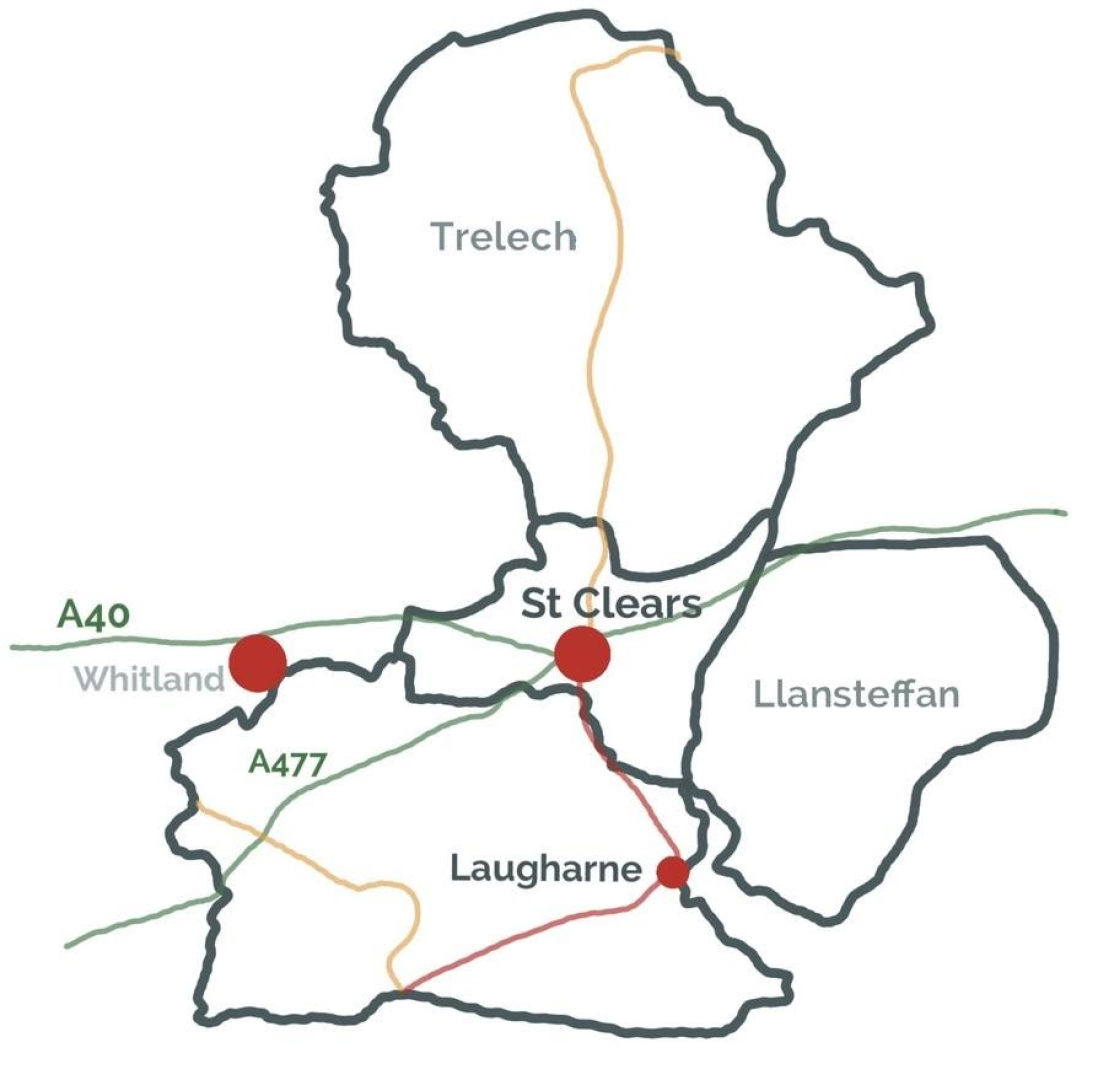
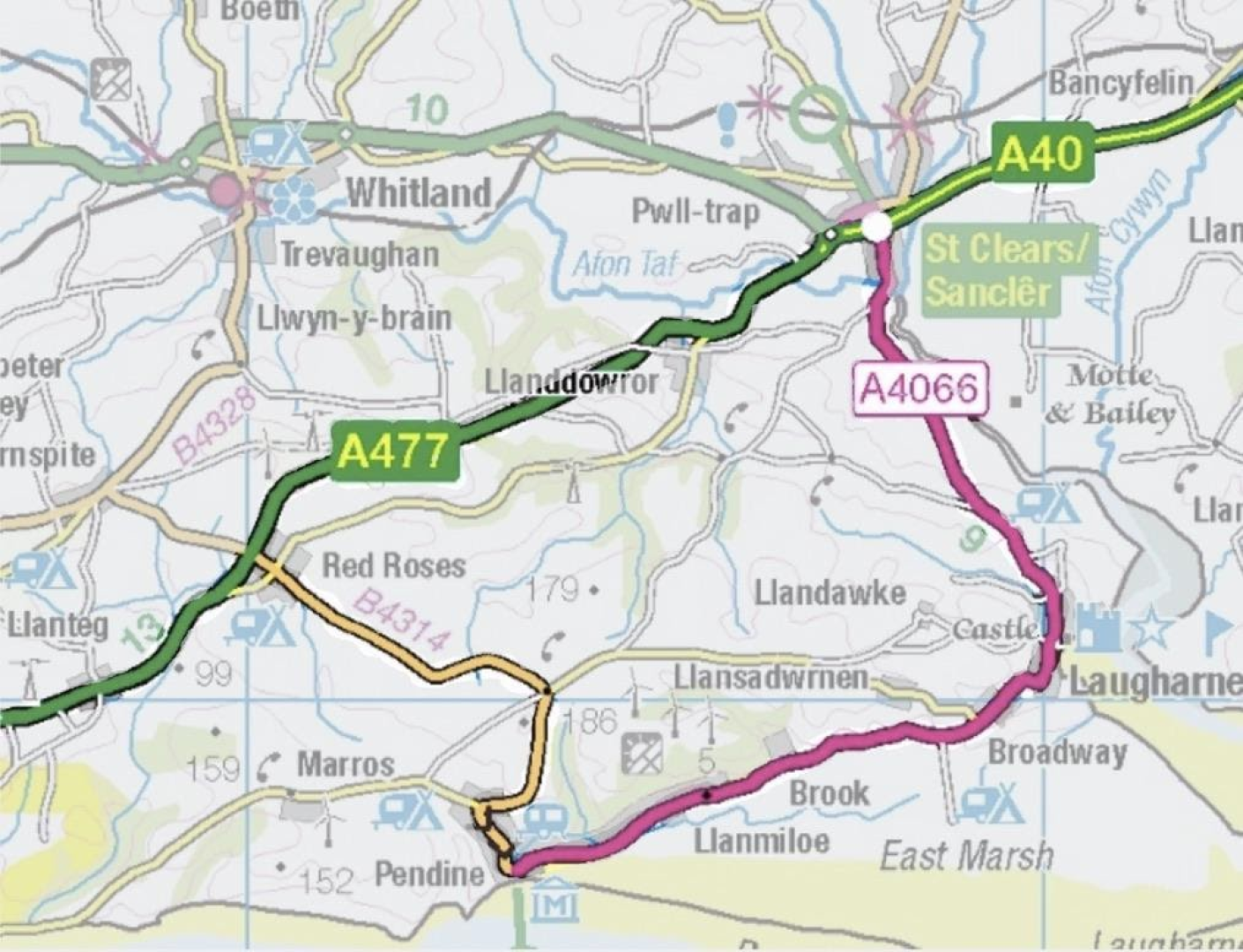
The A4066 between St Clears and the coastal resort of Pendine passes through the centre of the Laugharne, allowing relatively easy access to and from the A40, although the historic streets through the town are unsuited for large volumes of traffic. The local economy appears to be dominated by tourism accommodation and hospitality businesses, although the population benefits from employment opportunities further afield including light industrial and commercial employment areas around St Clears and a broader range of opportunities, including public sector employment in Carmarthen.
Outside of the town, the economy supports a range of rural enterprises including agricultural, land-based industries, food and drink and tourism. There are also many microbusinesses, including newer 'lifestyle', visitor-related and creative industries that combine both living and working in rural areas.
Laugharne's residents are mostly dependent on St Clears for access to a bigger range of local shops and services including the nearest supermarket, cash machine/ATM and leisure centre.
Laugharne is a small town with a large reputation because of its castle and historical architecture, the international profile associated with poet Dylan Thomas and picturesque coastline and attractive foreshore.
The township historically grew around the area of the original harbour and River Coran and is densely developed. Apart from small infill developments, most of the towns recent growth, including the primary school and housing, has taken place on the higher ground above the town (Gosport Street) and in the outlying countryside. The town has become a popular place to live and for second/holiday homes.
The A4066 between St Clears and the coastal resort of Pendine passes through the centre of the Laugharne, allowing relatively easy access to and from the A40, although the historic streets through the town are unsuited for large volumes of traffic. The local economy appears to be dominated by tourism accommodation and hospitality businesses, although the population benefits from employment opportunities further afield including light industrial and commercial employment areas around St Clears and a broader range of opportunities, including public sector employment in Carmarthen.
Outside of the town, the economy supports a range of rural enterprises including agricultural, land-based industries, food and drink and tourism. There are also many microbusinesses, including newer 'lifestyle', visitor-related and creative industries that combine both living and working in rural areas.
Laugharne's residents are mostly dependent on St Clears for access to a bigger range of local shops and services including the nearest supermarket, cash machine/ATM and leisure centre.
Socio-economic picture
The population of Laugharne is 2,700, and compared with rural Carmarthenshire over the last ten years there has been:
- significant population decline
- a growing older-aged population
- a delcine in the working-age population
- average economic activity and full-time employment
- below average full-time employment
- a relatively successful although lower-skilled local economy
- higher than average levels of home working and self-employment
- house prices higher than the average
- 6% decline in people speaking Welsh
The data shows a large part of the local economy is dependent on part-time, low skilled and lower wage incomes.
| Rural County | Laugharne area | |
| Population | Increase 1.8% | Decrease 5.3% |
| Working age | Decline 3% | Decreased 12.5% |
| Gross household income | £28,622 | £29,161 |
| Median house prices | £135k | £154k - £180k |
| Economically active | 66% | 66% |
| Full-time employment | 33% | 29% |
| Work from home | 7% | 8% |
| Self-employed | 14% | 19% |
| Largest occupation | Skilled trades 19% | Skilled trades 22% |
| No skills | 25% | 26% |
| Higher qualifications | 30% | 28% |
| Employed agriculture | 6% | 9% |
Sources: ONS Census & NOMIS - Baseline study
65% of the businesses in the Laugharne are in the hospitality, accommodation and retail sectors, whilst there are only 10% in traditional workshop and manufacturing industries. The largest local employers are also in the leisure sector with several resort hotels including extensive Seasons Holiday (Dylan Coastal Resort Luxury Lodges). However, a large proportion of residents find employment outside of the town in sectors including retail and health and social work.
The higher than average levels of self-employment reflects the scale of the agricultural sector, rural enterprises as well the part-time and seasonal nature of the economy. The foundational economy covers businesses providing essential local services, which includes local trades, car repair, child and social care.
Employment in agriculture and land-based industries (quarrying) remains higher than the rural average and continues to be a key part of the local economy. However, there are very few associated agri-businesses such as feed merchants, mechanical and engineering, trailers, tractor dealerships because they are located in nearby St Clears.
The largest employment sectors:
- 13% wholesale and retail trade
- 12% human health and social work
- 12% accommodation and food services
Town & visitor economy
The historic and distinctive town centre includes the dominant castle and stunning coastal views. However, Laugharne's historical 'high street' only provide basic local shopping for the residents and visitors. Even though the centre is small, there are some 20 business units mostly providing food, drink and accommodation. Even though the number of businesses is in decline, these have been converted to residential or holiday accommodation and there are very few vacant premises.
The centre is drawn out with the main and most vibrant area located opposite the castle and the main car park at The Grist. The area has a cluster of retail and hospitality businesses and includes the Select convenience store and a gift shop. The upper part of the town centre includes a deli, jewellers, pharmacy, hairdressers and post office.
The broad range of hospitality businesses has given the town a strong evening economy; however, this is typically seasonal with many businesses reducing opening hours during the winter. A major drawback, particularly for a visitor destination, is the absence of a cash machine/ATM's, although banking services are provided in the Post Office. Several important local community facilities are located in the town centre, including the town hall and doctor's surgery and community hall.
Visitor economy
Laugharne is an iconic visitor destination, painted by Constable and Turner and strongly associated with poet Dylan Thomas, and quaint historic and natural environment, the town's reputation has grown to attract a wider audience providing the film location for popular TV series Keeping Faith. In 2018 the Dylan Thomas Boat House received 29,180 visitors and Laugharne Castle 14,620, with both attractions seeing a small increase in visitor numbers.
The Laugharne Weekend is a festival normally held in April with a national profile and is a 'leftfield' celebration of literary and musical talent, attracting local, regional and national performers.
The town has a strong range of serviced accommodation including Brown's Hotel with its 15 rooms, the Cors Country House and the Boathouse B&B. nearby establishments include Corran Hotel and Spa and Broadway Country House and Pods. Self-catering accommodation is available in town at Great House, Gwalia House and Seaview, with Seasons Holiday Park offering a range of lodges, including a new luxury lodges option with spa facilities, treatment rooms, hydrotherapy pool and restaurant and bar and are growing the number of chalets to around 300 in the town.
Laugharne is one of Carmarthenshire's main tourism magnets able to attract international visitors into the County. It is also located on the popular Wales Coastal Path. However, there are several challenges including visibility and pedestrian access to the famous Boathouse and traffic management and visitor parking during the peak seasons.
The new major tourism attractor development at Pendine includes the Sands of Speed Museum, Eco Activity Holiday resort and major outdoor events facility. This is likely to positively benefit local accommodation and secondary spend, but negative impacts in terms of increasing traffic passing through the town centre.
Laugharne is an iconic visitor destination, painted by Constable and Turner and strongly associated with poet Dylan Thomas, and quaint historic and natural environment, the town's reputation has grown to attract a wider audience providing the film location for popular TV series Keeping Faith. In 2018 the Dylan Thomas Boat House received 29,180 visitors and Laugharne Castle 14,620, with both attractions seeing a small increase in visitor numbers.
The Laugharne Weekend is a festival normally held in April with a national profile and is a 'leftfield' celebration of literary and musical talent, attracting local, regional and national performers.
The town has a strong range of serviced accommodation including Brown's Hotel with its 15 rooms, the Cors Country House and the Boathouse B&B. nearby establishments include Corran Hotel and Spa and Broadway Country House and Pods. Self-catering accommodation is available in town at Great House, Gwalia House and Seaview, with Seasons Holiday Park offering a range of lodges, including a new luxury lodges option with spa facilities, treatment rooms, hydrotherapy pool and restaurant and bar and are growing the number of chalets to around 300 in the town.
Laugharne is one of Carmarthenshire's main tourism magnets able to attract international visitors into the County. It is also located on the popular Wales Coastal Path. However, there are several challenges including visibility and pedestrian access to the famous Boathouse and traffic management and visitor parking during the peak seasons.
The new major tourism attractor development at Pendine includes the Sands of Speed Museum, Eco Activity Holiday resort and major outdoor events facility. This is likely to positively benefit local accommodation and secondary spend, but negative impacts in terms of increasing traffic passing through the town centre.
Brand and marketing
Laugharne's online presence is tourism focussed and heavily reliant on Discover Carmarthenshire and the Dylan Thomas connection. However, it needs updating (Trip Advisor, for example, offers a 'Tin Shed Experience' which has been closed for some time and the cover image on Discover Carmarthenshire is of a business that has been closed for some years). And aside from the Boathouse and castle, there isn't much else being promoted to do once you arrive.
We have found that the town doesn't have a clear, up to date, an online place that visitors can go to see what the town has on offer from either tourism or local business offering perspective, and instead is reliant on a range of different sites including Visits Wales, Visit Carmarthenshire, the BBC etc.
However, there are businesses such as the Ferryman Deli and the famous Brown's Hotel which have harnessed their online platforms to market their brand and product offerings and the Laugharne Weekend Festival seems to communicate regularly and effectively with its audience which helps to give the town a feeling of vibrancy and significance.
Laugharne's online presence is tourism focussed and heavily reliant on Discover Carmarthenshire and the Dylan Thomas connection. However, it needs updating (Trip Advisor, for example, offers a 'Tin Shed Experience' which has been closed for some time and the cover image on Discover Carmarthenshire is of a business that has been closed for some years). And aside from the Boathouse and castle, there isn't much else being promoted to do once you arrive.
We have found that the town doesn't have a clear, up to date, an online place that visitors can go to see what the town has on offer from either tourism or local business offering perspective, and instead is reliant on a range of different sites including Visits Wales, Visit Carmarthenshire, the BBC etc.
However, there are businesses such as the Ferryman Deli and the famous Brown's Hotel which have harnessed their online platforms to market their brand and product offerings and the Laugharne Weekend Festival seems to communicate regularly and effectively with its audience which helps to give the town a feeling of vibrancy and significance.
Transport and movement
Traffic and parking are both significant concerns for the future growth and attractiveness of Laugharne. Several studies have examined in detail the issues and opportunities. The key issues include:
Traffic and parking are both significant concerns for the future growth and attractiveness of Laugharne. Several studies have examined in detail the issues and opportunities. The key issues include:
- During peak periods (both daytime and evening) parking areas fill quickly which forces many tourists to displace along the main thoroughfare, and into the surrounding residential streets.
- The narrow street network means the access and traffic flow can easily be obstructed by a small amount of inconsiderate parking, leading to congestion.
- Large vehicles – visitor coaches, agricultural vehicles and quarry lorries regularly passing through the centre adding to congestion
Road network for Laugharne & Pendine
Broadband and digital connectivity
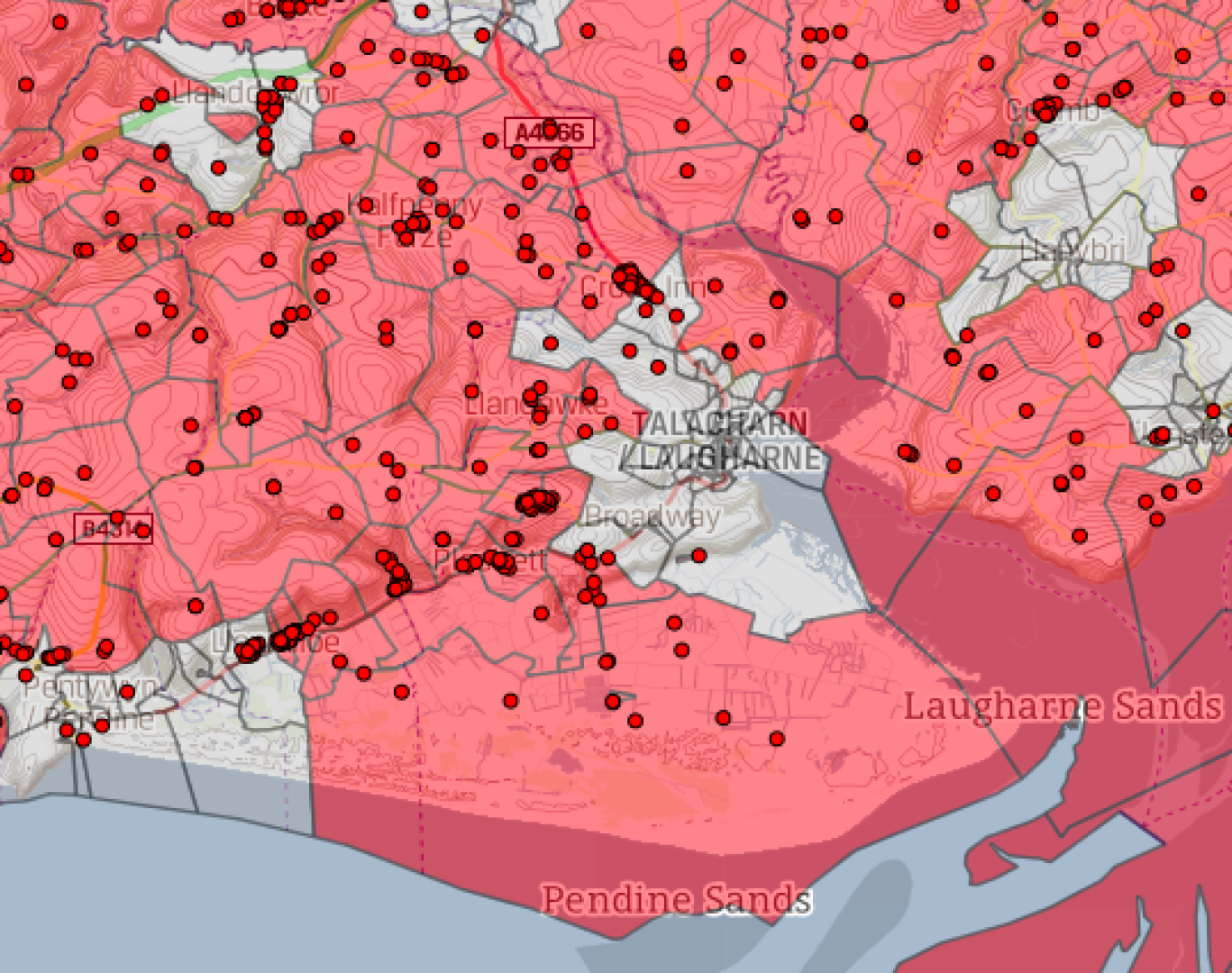
The central town area appears to have good digital connectivity, although it is clear that there are larger areas (marked in red) in the wider countryside and villages with connection difficulties. There are 210 (70%) out of a total of 298 premises in the Laugharne postcode area without non-superfast broadband.
The central town area appears to have good digital connectivity, although it is clear that there are larger areas (marked in red) in the wider countryside and villages with connection difficulties. There are 210 (70%) out of a total of 298 premises in the Laugharne postcode area without non-superfast broadband.
Planning, development & environment
There are limited opportunities for new development in or near the town centre due to the protected historical environment and low-lying areas at risk of flooding. This has contributed to the demand for converting existing employment and commercial premises into higher-value residential uses.
A long-term empty and semi-derelict building positioned in the centre of the town is Island House, a grade II* residential property. The building is dilapidated and in a poor state of repair with a long-running local campaign to find a viable future use and to restore and reoccupy the building.
New developments are restricted to the higher areas located above the town. The Revised Local Development Plan considers Laugharne suitable for a small amount of residential growth including 3 sites with potential for 72 units (of which 15 will be affordable), although there are no new employment sites planned.
As well as the need for more homes, overall, the requirement is for smaller, less expensive housing, to address the imbalance between higher house prices and limited supply of appropriate homes in rural areas, particularly for one-person and couples.
There are limited opportunities for new development in or near the town centre due to the protected historical environment and low-lying areas at risk of flooding. This has contributed to the demand for converting existing employment and commercial premises into higher-value residential uses.
A long-term empty and semi-derelict building positioned in the centre of the town is Island House, a grade II* residential property. The building is dilapidated and in a poor state of repair with a long-running local campaign to find a viable future use and to restore and reoccupy the building.
New developments are restricted to the higher areas located above the town. The Revised Local Development Plan considers Laugharne suitable for a small amount of residential growth including 3 sites with potential for 72 units (of which 15 will be affordable), although there are no new employment sites planned.
As well as the need for more homes, overall, the requirement is for smaller, less expensive housing, to address the imbalance between higher house prices and limited supply of appropriate homes in rural areas, particularly for one-person and couples.