Key issues & opportunities
The main challenge for Laugharne is how to manage the town's growth as a sustainable place to live, work and visit without damaging the special qualities that make it one of Carmarthenshire's main tourism magnets with the qualities to attract international visitors.
The evidence indicates the population has been in decline as well as getting older, and the number of people of working age has been falling. House prices are higher than average, and affordability is an issue for young people and those working in the town. The number of traditional manufacturing and light industrial businesses has been in a steady decline with numerous business properties converted into residential.
Nevertheless, opportunities for seasonal employment in accommodation and hospitality are very good and the area benefits from good accessibility for employment opportunities in St Clears, Pendine and Carmarthen.
The key priorities for the town include:
There are 9 key ideas reflecting the emerging priorities for the town. You can comment on the ideas here and comment on our interactive map here.
1 - Restart and recovery measures - responding to COVID-19
The Covid-19 pandemic is the biggest public health and economic crisis in generations. It has had a dramatic effect on communities, the economy and how we live and work. It has reminded us that the strength of the places where we live, and work can at times be fragile.
The quality and accessibility of the town and countryside were hugely important for people's health and well-being during the first lockdown. There was a reported collective appreciation of the value of green spaces, walking and cycling routes and the convenience and service offered by local shops and amenities.
Among the many important challenges in the recovery period are the urgent actions to support local business and employers and to determine which changes in behaviour arising from the pandemic are emerging as permanent features of life and work. These have implications for the town because people are using places differently, travelling less and spending more time locally and working from home. The recovery and growth plan must respond to these changes and contribute to a sustainable recovery, shaping the town around a vision for a more economically resilient place.
Lockdowns and the economic impact of the pandemic are impacting businesses on a daily basis. We have listed some ideas, but please tell us what are the most important issues and opportunities for economic recovery? You can comment on the ideas here.
2 - Parking, walking & traffic management
A) Increase town centre parking The location and availability of parking is a significant concern for the future growth and attractiveness of Laugharne. Several studies have examined the causes and opportunities to address them. The problems are seasonal and weather dependent, however strategic and long-term solution will be required if the ambition to grow the number of visitors and to encourage people to stay in Laugharne for longer periods are to be achieved. The risks of the current difficulties continuing include lost trade, discouraging investment, damaged reputation and delayed return visits.
Parking issues are also linked to the amount of through traffic, including visitors directed towards Pendine.
Several potentially immediate and longer-term options exist:
B) Visitor traffic and destination signs The quality of visitor signage and information from the A40 is patchy and inconsistent. A coordinated signage strategy for Laugharne and Pendine (through traffic) is needed. Options for diverting traffic heading for Pendine's along alternative and more direct route should also be investigated.
3 - Supporting business growth
Where there is a lack of employment infrastructure to accommodate current or future needs, the resilience and sustainability of an area may be undermined, possibly contributing to decline. The lack of employment opportunities is also a key reason behind rural depopulation, particularly in the younger workforce. By supporting and encouraging the growth and expansion of locally grounded firms, particularly in more specialised industries, this will help to create long term higher paid employment, retain workers, broaden the skills base and help sustain local communities.
The foundational economy is the backbone of the rural economy and represents those parts of the economy that supports our everyday needs (social care, retail, tourism, food, drink, construction, energy etc). Similarly, local food and drink processing of agricultural and horticultural products is a growing industry. All of these types of businesses require similar business support and employment infrastructure such as good quality and affordable workspace with the best possible digital connectivity.
A) Investment in business premises to support new start-ups, business growth and expansionThere are few suitable workspaces to support the growth of micro and small businesses in Laugharne. However, opportunities should be explored to create new business space either through new development sites, using surplus publicly owned buildings, acquiring vacant buildings, or establishing new shared workspaces.
In rural areas where large scale developer interest is largely absent, the public sector also has an important role to play working with a range of smaller local developers and landowners to address the hurdles to development. These include addressing the viability gap between the cost of building and modernising new employment spaces and the rental income; and an important economic development role in guiding small developers through the planning process.
B) Work hubs and Shared workspacesChanges to working practices and the growing interest and ability to work closer to home and remotely from main offices may result in a higher demand to live in rural areas and opportunities to retain the working-age population. Opportunities that help provide flexible workspaces closer to home include:
C) Re-use of vacant and underutilised buildingsThese provide opportunities for a range of enterprise and physical regeneration opportunities.
D) Supporting business growth within grounded firmsThe growth of the local economy is linked with the success of the towns larger employers and in particular, locally grounded firms that have decision making rooted firmly in the community. There is a strong emphasis on increasing the number of grounded firms, as well as establishing a firmer base of medium-sized businesses (c.50 employees) which are capable of selling outside Wales.
E) Agriculture and food productionMuch of the area's agriculture is in the dairy sector, and at present, Carmarthenshire has no direct milk processing facility; in view of this, the Rural Task Force have suggested that a micro/macro milk processing facility based on a cooperative model be investigated. It is also supportive of small and medium-sized food based business and the establishment of production units to support added value food products, which could include artisan cheeses, ice creams and other dairy products capable of commanding a premium based on local provenance.
The aim is to support initiatives that create higher value and more productive businesses by increasing the productivity, diversity and efficiency of farming. Proposals in the plan for new modern workspaces, digital infrastructure and marketing and promotion seek to support and contribute towards this aim.
4 - Promoting Laugharne
As the economy recovers from the pandemic and positive change occurs, Laugharne will need to project an attractive image of the town and the businesses to the local community and visitors. For a well-known and established destination, it's surprising that Laugharne doesn't have its own online presence as a destination for visitors and depends on a fragmented approach with various sites (Visit Carmarthenshire, Discover Carmarthenshire, BBC, Laugharne Weekend, Visit Wales, CADW) all have their own approaches.
Opportunity:
5 - SMART digital town and countryside
Digital technology has played a significant role in enabling businesses and communities to adapt during the COVID 19 pandemic. Carmarthenshire CC is currently working with both UK and Welsh Government to fund businesses, employees and communities to take advantage of all the benefits associated with faster and more reliable internet connections and to develop wi-fi digital applications to promote rural market towns e.g 'push notifications' to members of the public visiting towns.
Opportunity:
6 - Key sites & public realm
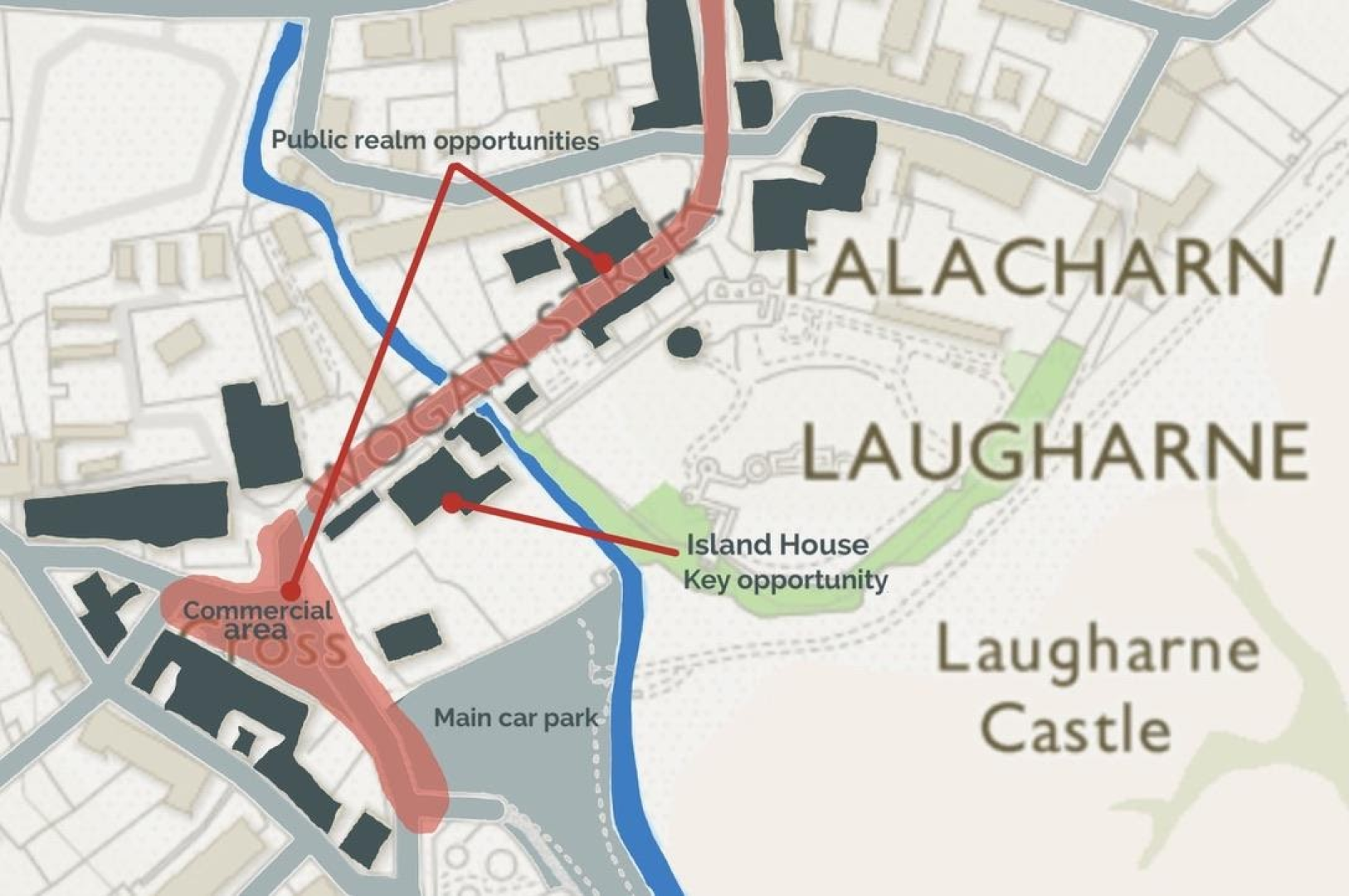
A) Island HouseIsland House was purchased by Island House Restoration Ltd in March 2020 following a period of 16 years dilapidation. The 16th century Grade 11* listed house has played a part in some of the most important chapters of Laugharne's past and treasured by the local community who have campaigned for it to be saved.
Located next to the castle and at the heart of the town, the highly visible building is planned to be restored to its original condition and convert it into a hotel, bar and restaurant. Carmarthenshire County Council and Cadw (the historic environment service in Wales) have been involved at various stages.
The Restoration and re-use of Island House is of national importance and has the potential to add a new commercial and heritage attraction to the town centre. The levels of investment necessary to fully restore the building require long term viable commercial uses.
Actions that would either directly or indirectly encourage the restoration of Island House include addressing the shortage of car parking spaces and public realm improvements addressing pedestrians and vehicle movement in the area that would help to enhance the setting of Island House as well as the commercial heart of the town.
B) Town centre public realmThe narrow street and pavements in areas of the town centre have created difficulties with safe pedestrian movement. This is a particular problem at the peak time of years with visitor often walking in the road at the same time as moving traffic. The COVID-19 situation has added to the challenge of maintaining a safe and socially distances pedestrian environment for people walking the streets as well as for queuing outside.
Several environmental and urban design measures can be used to enhance the public realm to better balance pedestrian spaces and the movement of traffic through the centre. The aims include sensitively redesigning on-street public parking spaces and resolving key pinch point in the area around Wogan Street and The Grist. Landscape improvements would enhance the overall setting for businesses and visitors to the main commercial area of The Grist.
7 - Procurement goods, works and services from the public sector
The public sector in Carmarthenshire spends hundreds of millions per annum on goods, works and services, providing businesses of all sectors and sizes with a range of commercial opportunities. The County Council and wider public sector recognise the significance of their spending power and look to purchase as much of this as possible from within the County. More can be done to support local procurement with opportunities to:
8 - Community energy schemes
Local resilience is a key aim of the Ten Towns initiative and thus a core element is to support the development of community energy plans for the respective towns which will ultimately provide a source of income for local communities and local businesses as well as help to address fuel poverty in rural areas. This Plan outlines the potential to embrace the opportunities linked to renewable energy which is well established in the County particularly in terms of its direct benefits for local communities and supporting greater environmental resilience.
To help achieve this Ynni Sir Gar (Carmarthenshire Energy) will support communities to identify and scope potential sites for community energy generation. The host sites will benefit from a reduction in their energy bill, as electricity used whilst the panels are generating will be available at a reduced cost.
9 - Affordable homes
Thriving, resilient and sustainable rural towns require a mix of new housing as well as employment opportunities if retaining and attracting a working-age population is to be achieved. The dynamics of the rural housing market includes several factors, not only house price, but other issues such as relative affordability, inward migration, travel-to-work patterns, population projections and new dwelling completions rates etc. Overall, there is the need for smaller, less expensive homes for young and newly forming households - whether at market price, intermediate or affordable rent.
Laugharne has experienced relatively low levels of development in recent years although new homes have recently started to be built,hHowever, prices remain higher than average and there are pressures onthe existing stock from second homeowners and AibnbB style holiday lets.
Through a series of actions, the opportunity exist for the public sector, landowners and smaller local developers to work together to bring forward the planned new growthfollowingh the Local Development Plan and building a sustainable economy.
The evidence indicates the population has been in decline as well as getting older, and the number of people of working age has been falling. House prices are higher than average, and affordability is an issue for young people and those working in the town. The number of traditional manufacturing and light industrial businesses has been in a steady decline with numerous business properties converted into residential.
Nevertheless, opportunities for seasonal employment in accommodation and hospitality are very good and the area benefits from good accessibility for employment opportunities in St Clears, Pendine and Carmarthen.
The key priorities for the town include:
- Resolving parking problems at peak times of the year to avoid damaging the town's attractiveness and to encourage the growth in the number of visitors and new businesses
- Traffic management through the town centre to manage seasonal peaks and the predicted increases in traffic from the new visitor attraction at Pendine
- Protection and creation of new workshop/maker spaces to diversify the local economy
- Restoration and re-use of the historic Island House to create a new viable attraction and reason to visit the town
There are 9 key ideas reflecting the emerging priorities for the town. You can comment on the ideas here and comment on our interactive map here.
1 - Restart and recovery measures - responding to COVID-19
The Covid-19 pandemic is the biggest public health and economic crisis in generations. It has had a dramatic effect on communities, the economy and how we live and work. It has reminded us that the strength of the places where we live, and work can at times be fragile.
The quality and accessibility of the town and countryside were hugely important for people's health and well-being during the first lockdown. There was a reported collective appreciation of the value of green spaces, walking and cycling routes and the convenience and service offered by local shops and amenities.
Among the many important challenges in the recovery period are the urgent actions to support local business and employers and to determine which changes in behaviour arising from the pandemic are emerging as permanent features of life and work. These have implications for the town because people are using places differently, travelling less and spending more time locally and working from home. The recovery and growth plan must respond to these changes and contribute to a sustainable recovery, shaping the town around a vision for a more economically resilient place.
Lockdowns and the economic impact of the pandemic are impacting businesses on a daily basis. We have listed some ideas, but please tell us what are the most important issues and opportunities for economic recovery? You can comment on the ideas here.
- Business support and advice – continued promotion of the information and support available via Carmarthenshire CC and Business Wales
- Town centre environment – review the safety and comfort of the public spaces measures and identify improvements
- Leisure and hospitality sectors – identify additional opportunities to improve and support the uses of pavements and public spaces for customers
- Parking – identify issues that may have arisen in terms of increased demand or the loss of on-street parking because of social distance measures.
- Clear and effective communication and key messaging to promote the town centre and the visitor economy.
- Monitor business closures and job loss announcements from key employers
- Broadband infrastructure improvements to support rural business and increased remote/home working
- Promote opportunities for local business to tender for public sector work contracts and support businesses with local delivery, local supply chains and procurement.
2 - Parking, walking & traffic management
A) Increase town centre parking The location and availability of parking is a significant concern for the future growth and attractiveness of Laugharne. Several studies have examined the causes and opportunities to address them. The problems are seasonal and weather dependent, however strategic and long-term solution will be required if the ambition to grow the number of visitors and to encourage people to stay in Laugharne for longer periods are to be achieved. The risks of the current difficulties continuing include lost trade, discouraging investment, damaged reputation and delayed return visits.
Parking issues are also linked to the amount of through traffic, including visitors directed towards Pendine.
Several potentially immediate and longer-term options exist:
- White line existing parking areas - a lower cost quick win opportunity to improve the efficient uses of existing on-street and designated parking areas through 'white line' parking bays. This potentially increases the number of available spaces and helps reduce inconsiderate parking. Key locations include Clifton Street; King Street; The Grist; The Strand/Foreshore Car Park.
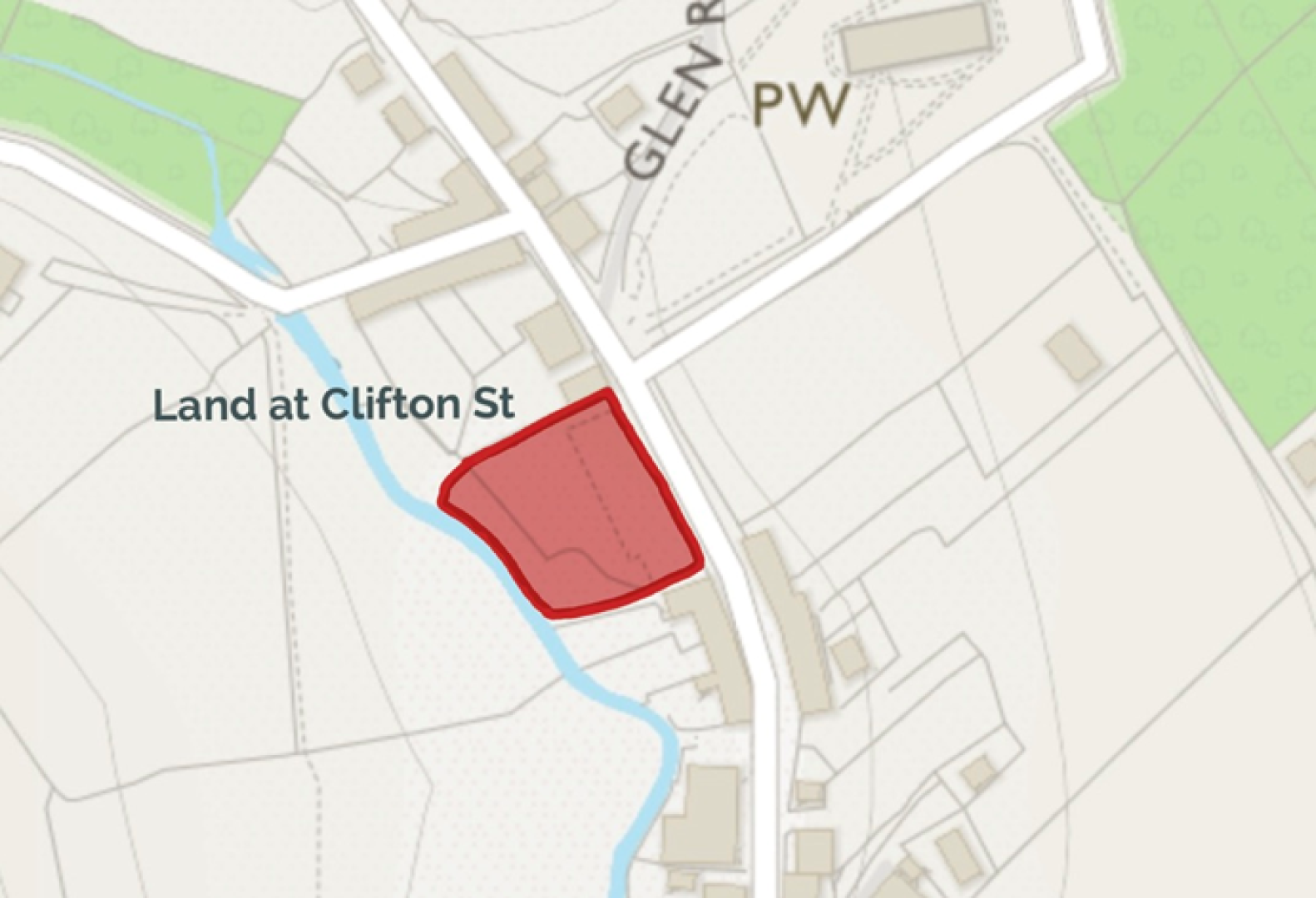
- Land at Clifton Street - the location is ideal to intercept visitor/worker traffic without the need to drive through the town centre. The opportunity to direct footfall along King Street has the potential to support existing as well as new business opportunities. The car park is close to Dylan Thomas's grave and Laugharne Heritage Walk and large enough for a small amount of coach parking
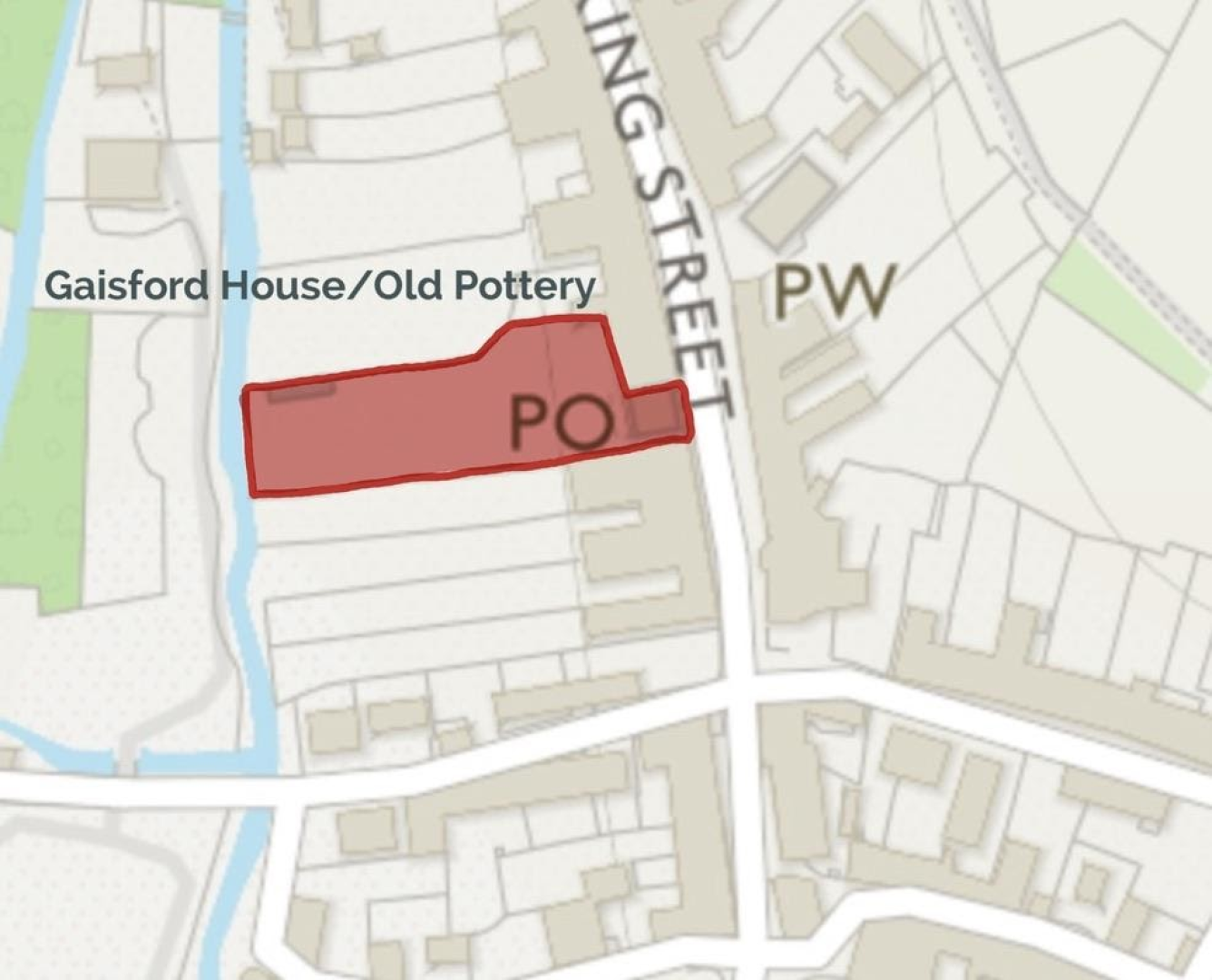
- Land at Gailsford House and Old Pottery, Kings Street - permission was granted in 2015 for the construction of 14 residential units and 50 public parking spaces.
- Laugharne Parking Strategy - wider parking management and charging strategy recommendations were made in 2016 and include the introduction of parking charges and residential permit parking areas. It is likely that in future some of these measures will be necessary to effectively manage traffic and parking.
B) Visitor traffic and destination signs The quality of visitor signage and information from the A40 is patchy and inconsistent. A coordinated signage strategy for Laugharne and Pendine (through traffic) is needed. Options for diverting traffic heading for Pendine's along alternative and more direct route should also be investigated.
3 - Supporting business growth
Where there is a lack of employment infrastructure to accommodate current or future needs, the resilience and sustainability of an area may be undermined, possibly contributing to decline. The lack of employment opportunities is also a key reason behind rural depopulation, particularly in the younger workforce. By supporting and encouraging the growth and expansion of locally grounded firms, particularly in more specialised industries, this will help to create long term higher paid employment, retain workers, broaden the skills base and help sustain local communities.
The foundational economy is the backbone of the rural economy and represents those parts of the economy that supports our everyday needs (social care, retail, tourism, food, drink, construction, energy etc). Similarly, local food and drink processing of agricultural and horticultural products is a growing industry. All of these types of businesses require similar business support and employment infrastructure such as good quality and affordable workspace with the best possible digital connectivity.
A) Investment in business premises to support new start-ups, business growth and expansionThere are few suitable workspaces to support the growth of micro and small businesses in Laugharne. However, opportunities should be explored to create new business space either through new development sites, using surplus publicly owned buildings, acquiring vacant buildings, or establishing new shared workspaces.
In rural areas where large scale developer interest is largely absent, the public sector also has an important role to play working with a range of smaller local developers and landowners to address the hurdles to development. These include addressing the viability gap between the cost of building and modernising new employment spaces and the rental income; and an important economic development role in guiding small developers through the planning process.
B) Work hubs and Shared workspacesChanges to working practices and the growing interest and ability to work closer to home and remotely from main offices may result in a higher demand to live in rural areas and opportunities to retain the working-age population. Opportunities that help provide flexible workspaces closer to home include:
- Feasibility study – a local study to investigate the specific level of demand and requirements from the local town and rural population.
- Investigate potential for a new public sector work hub created in rural towns to accommodate agile working across the county.
C) Re-use of vacant and underutilised buildingsThese provide opportunities for a range of enterprise and physical regeneration opportunities.
- Town centre property offers opportunities for 'pop-up' and trial-testing new customer-facing business ideas particularly for young people to become actively involved in the community and to develop entrepreneurial skills.
- New business premises – either re-using surplus public sector buildings or selectively acquiring key vacant buildings that have made a broader contribution to the physical and economic regeneration of the town.
D) Supporting business growth within grounded firmsThe growth of the local economy is linked with the success of the towns larger employers and in particular, locally grounded firms that have decision making rooted firmly in the community. There is a strong emphasis on increasing the number of grounded firms, as well as establishing a firmer base of medium-sized businesses (c.50 employees) which are capable of selling outside Wales.
- Medium Size Businesses - There are a number of medium-size and grounded firms based in Laugharne. The measure to support their growth include:
- Engaging with leading employers to identify future investment opportunities and area of future support
- Help to support the up-skilling of the existing workforce and to train and re-skill future employees
- Investigate opportunities for the local economy from within their respective supply chains.
- Micro-businesses - Identify and target support for the next phase of growth amongst small micro-enterprises, often family-owned firms and self-employed people within the community.
E) Agriculture and food productionMuch of the area's agriculture is in the dairy sector, and at present, Carmarthenshire has no direct milk processing facility; in view of this, the Rural Task Force have suggested that a micro/macro milk processing facility based on a cooperative model be investigated. It is also supportive of small and medium-sized food based business and the establishment of production units to support added value food products, which could include artisan cheeses, ice creams and other dairy products capable of commanding a premium based on local provenance.
The aim is to support initiatives that create higher value and more productive businesses by increasing the productivity, diversity and efficiency of farming. Proposals in the plan for new modern workspaces, digital infrastructure and marketing and promotion seek to support and contribute towards this aim.
4 - Promoting Laugharne
As the economy recovers from the pandemic and positive change occurs, Laugharne will need to project an attractive image of the town and the businesses to the local community and visitors. For a well-known and established destination, it's surprising that Laugharne doesn't have its own online presence as a destination for visitors and depends on a fragmented approach with various sites (Visit Carmarthenshire, Discover Carmarthenshire, BBC, Laugharne Weekend, Visit Wales, CADW) all have their own approaches.
Opportunity:
- Destination marketing initiative to identify the core messages and the key themes, stories and reasons to visit including the towns historic Welsh cultural ties, specialist businesses, local producer and activities. The opportunity exists to also work with Pendine businesses to create a coastal resort destination that increases dwell times and extended day and overnight visits.
- In addition to a big campaign that shouts loud from one central source about the town and surrounding area, the proposal is to also reach the town's customer and visitors through the local businesses themselves. This would be achieved by harnessing the collective communication power of the individual business and their direct interaction with existing audiences and customers using town level core messaging and the social media and communication skills that should be developed to empower each business.
5 - SMART digital town and countryside
Digital technology has played a significant role in enabling businesses and communities to adapt during the COVID 19 pandemic. Carmarthenshire CC is currently working with both UK and Welsh Government to fund businesses, employees and communities to take advantage of all the benefits associated with faster and more reliable internet connections and to develop wi-fi digital applications to promote rural market towns e.g 'push notifications' to members of the public visiting towns.
Opportunity:
- The aim is to bring Gigabit-capable connectivity to the whole community. Mapping the need for investment requires rural residents and small businesses with less than 100mbps to register for government support e.g. Broadband Upgrade fund and Gigabit Broadband Voucher Scheme with the aggregated demand used by the Council to broker improvements with telecom providers.
- The SMART town combines the deployment of a Town Wi-Fi solution, an Internet of Things innovation network, Digital events, improved connectivity for premises, community connectivity projects etc. The intention is to develop the right combination of connectivity infrastructure, awareness, skills and support to thrive and take advantage of the Digital revolution.
6 - Key sites & public realm
A) Island HouseIsland House was purchased by Island House Restoration Ltd in March 2020 following a period of 16 years dilapidation. The 16th century Grade 11* listed house has played a part in some of the most important chapters of Laugharne's past and treasured by the local community who have campaigned for it to be saved.
Located next to the castle and at the heart of the town, the highly visible building is planned to be restored to its original condition and convert it into a hotel, bar and restaurant. Carmarthenshire County Council and Cadw (the historic environment service in Wales) have been involved at various stages.
The Restoration and re-use of Island House is of national importance and has the potential to add a new commercial and heritage attraction to the town centre. The levels of investment necessary to fully restore the building require long term viable commercial uses.
Actions that would either directly or indirectly encourage the restoration of Island House include addressing the shortage of car parking spaces and public realm improvements addressing pedestrians and vehicle movement in the area that would help to enhance the setting of Island House as well as the commercial heart of the town.
B) Town centre public realmThe narrow street and pavements in areas of the town centre have created difficulties with safe pedestrian movement. This is a particular problem at the peak time of years with visitor often walking in the road at the same time as moving traffic. The COVID-19 situation has added to the challenge of maintaining a safe and socially distances pedestrian environment for people walking the streets as well as for queuing outside.
Several environmental and urban design measures can be used to enhance the public realm to better balance pedestrian spaces and the movement of traffic through the centre. The aims include sensitively redesigning on-street public parking spaces and resolving key pinch point in the area around Wogan Street and The Grist. Landscape improvements would enhance the overall setting for businesses and visitors to the main commercial area of The Grist.
7 - Procurement goods, works and services from the public sector
The public sector in Carmarthenshire spends hundreds of millions per annum on goods, works and services, providing businesses of all sectors and sizes with a range of commercial opportunities. The County Council and wider public sector recognise the significance of their spending power and look to purchase as much of this as possible from within the County. More can be done to support local procurement with opportunities to:
- encourage local businesses to access advice and guidance on local procurement opportunities.
- promote opportunities, particularly to small and new businesses, for lower value public sector contracts which may traditionally not have been attractive to smaller suppliers.
8 - Community energy schemes
Local resilience is a key aim of the Ten Towns initiative and thus a core element is to support the development of community energy plans for the respective towns which will ultimately provide a source of income for local communities and local businesses as well as help to address fuel poverty in rural areas. This Plan outlines the potential to embrace the opportunities linked to renewable energy which is well established in the County particularly in terms of its direct benefits for local communities and supporting greater environmental resilience.
To help achieve this Ynni Sir Gar (Carmarthenshire Energy) will support communities to identify and scope potential sites for community energy generation. The host sites will benefit from a reduction in their energy bill, as electricity used whilst the panels are generating will be available at a reduced cost.
9 - Affordable homes
Thriving, resilient and sustainable rural towns require a mix of new housing as well as employment opportunities if retaining and attracting a working-age population is to be achieved. The dynamics of the rural housing market includes several factors, not only house price, but other issues such as relative affordability, inward migration, travel-to-work patterns, population projections and new dwelling completions rates etc. Overall, there is the need for smaller, less expensive homes for young and newly forming households - whether at market price, intermediate or affordable rent.
Laugharne has experienced relatively low levels of development in recent years although new homes have recently started to be built,hHowever, prices remain higher than average and there are pressures onthe existing stock from second homeowners and AibnbB style holiday lets.
Through a series of actions, the opportunity exist for the public sector, landowners and smaller local developers to work together to bring forward the planned new growthfollowingh the Local Development Plan and building a sustainable economy.
- De-risking the development process – moving away from the traditional 'shop window' of merely allocating land for housing and providing evidence of housing need, market demand and understanding of the cost and other requirements necessary to obtain planning permission
- Matching small local developers with landowners of development sites
- Through supporting the local developers there are benefits for the local supply chain including local sourcing for timber, other building materials, use of local skilled trades, training and local employment